You see “ski-in/ski-out” on a Mountain Village listing and picture clicking into your skis right outside the door. But what does that really look like on the ground in Telluride’s slopeside neighborhoods? Your time on snow, rental performance, and resale appeal all hinge on the details.
In this guide, you’ll learn what truly counts as ski-in/ski-out in Mountain Village, how gondola access fits into the picture, and which questions to ask before you buy. You’ll also get a practical due diligence checklist you can use on any showing. Let’s dive in.
What ski-in/ski-out means
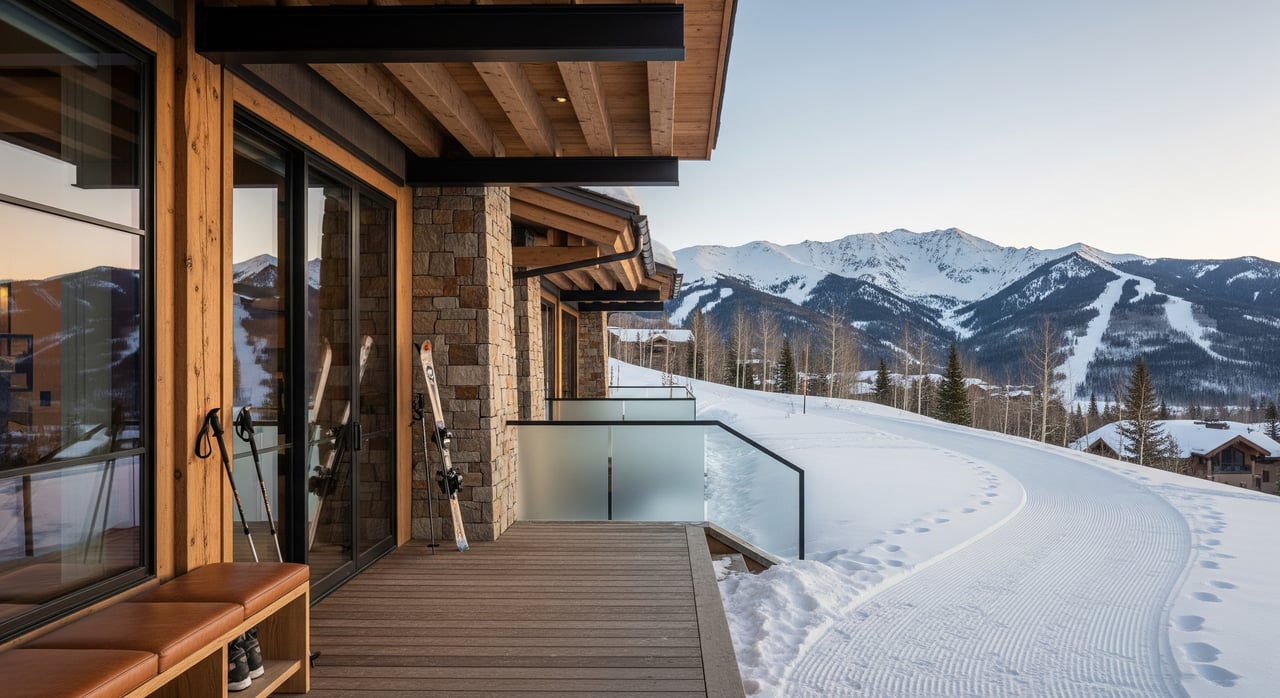
At its core, a ski-in/ski-out property lets you access skiable terrain or a lift from the building without needing a car or a long, awkward transfer. The goal is minimal friction between your door and the snow.
Common criteria buyers use:
- Direct on-snow entry or a maintained ski path from the building to a groomed trail, skiway, or lift.
- No public road to cross on foot or by vehicle to reach a trail or lift.
- Practical logistics for carrying skis and boots, including elevators, covered walkways, and sensible stair counts.
- Clear, winter-maintained routes that work when the resort is operating.
Key distinctions:
- True ski-in/ski-out. Immediate, practical on-snow access from the building or a dedicated skiway. No vehicle or public-road crossing.
- Ski-accessible or close to slopes. A short walk, stairs to a skiway, a brief shuttle, or a quick gondola ride. Convenient, but not the same as stepping onto snow.
- Gondola-adjacent. Near the free Telluride gondola boarding area. Very useful for transit and mountain access, though the gondola itself is not skiing.
Mountain Village specifics
Mountain Village places you in the center of Telluride Ski Resort’s lift and trail network. The Village Core and adjacent neighborhoods cluster around base lifts, skiways, and the free gondola that links Mountain Village with the Town of Telluride.
What is typical here:
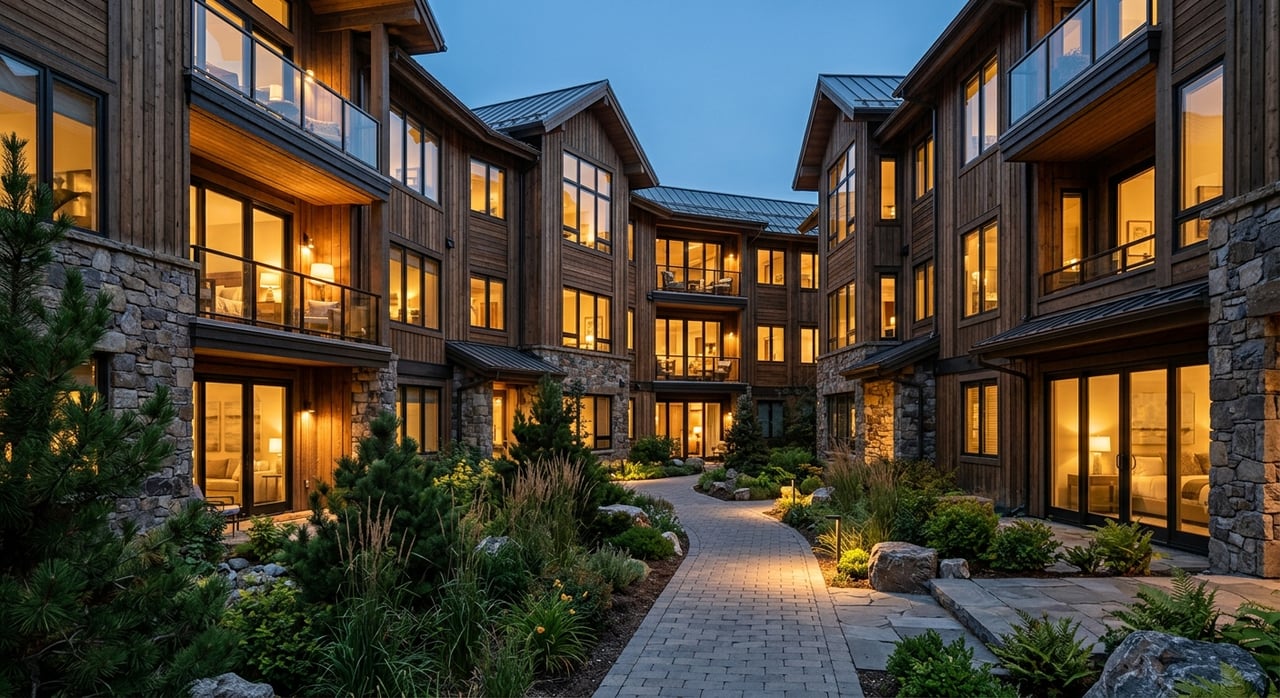
- Slopeside condos, hotel-style residences, townhomes, and single-family homes near trails and lift terminals.
- Ski lockers, boot rooms, and slope-level entries are common in many buildings, though the quality and location of these amenities vary.
- Some properties require a short, winter-maintained stair or paved approach to reach a groomed skiway. Whether this feels like ski-in/ski-out depends on distance, steps, and maintenance.
Gondola realities:
- Gondola proximity is a big value add for daily life. It offers predictable, car-free movement between towns and to mid-mountain areas.
- Buyers who want immediate skiing may not view gondola-only access as ski-in/ski-out. If you expect to step onto snow, verify the exact route from your unit to a trail or lift.
True ski-in/ski-out vs gondola-close
Both can be excellent, but they serve slightly different priorities.
- Choose true ski-in/ski-out if you want first tracks with minimal effort, quick trips back for lunch, and the easiest gear logistics for families or groups.
- Choose gondola-close if you value car-free transit for dining and errands, or you host non-skiers who want easy access to both Mountain Village and Telluride. It is highly convenient, just different from on-snow entry.
How access affects value and rentals
Price dynamics:
- In Telluride and Mountain Village, true slopeside inventory is scarce. That scarcity, combined with strong second-home demand, typically supports premiums for on-snow access. The exact premium depends on the building, views, finishes, and market timing. Use current local comps to quantify any claim.
Rental performance:
- True ski-in/ski-out and gondola-adjacent units often see stronger winter occupancy and higher nightly rates because they reduce guest friction.
- On-site rental desks, slope-level check-in, and dedicated ski lockers can lift rental appeal and average daily rate.
- Always check HOA rules and local short-term rental regulations to confirm what is allowed for your specific unit.
Daily convenience:
- Immediate ski access can save meaningful time every day, especially with kids and gear.
- Gondola access creates year-round utility for dining, events, and car-free movement between Mountain Village and Telluride.
Costs to consider:
- Buildings with more amenities often have higher HOA dues. Model these costs alongside potential rental income.
- Proximity to ski traffic can increase wear. Insurance terms may also reflect local slope exposure and mitigation needs.
What to verify before you buy
You want to validate the marketing language with on-the-ground proof. Use this checklist to reduce surprises.
Documents to request
- Recorded plat, survey, and legal description. Confirm any deeded skiway or easement and who controls it.
- CC&Rs, bylaws, and recent HOA meeting minutes. Look for rules on short-term rentals, winter maintenance, storage allocations, and planned assessments.
- Capital reserve study or planned project list that could affect dues.
- Recent sales comps for the building and nearby slopeside options. Ask for rental performance reports from the property manager, including occupancy and ADR.
- Home inspection focused on entry routes, stairs and walkways, roof snow load, and doors used in winter.
- Insurance history and any claims related to snow, avalanche, or water intrusion.
- Town and county records for permits, code compliance, and any relevant mitigation plans.
Walk and time the route
- Trace the exact path from your unit door to the nearest trail, skiway, lift, or gondola. Count steps and note any level changes.
- Confirm whether the route is shoveled, heated, or covered. Try it with skis and boots in hand.
- Check elevator access between your unit and the skiway or garage. If the elevator is out, what is the backup route?
- Time how long it takes to reach first chair, mid-mountain facilities, and back to your unit for lunch.
Legal and safety checks
- Verify any skiway or access path as a recorded easement. Ask whether it can be changed or closed and who maintains it.
- Identify any need to cross a public right-of-way.
- Review local avalanche information and mitigation practices for your micro-location. Understand historical closures or controls that could affect access.
- Confirm winter emergency access routes and how ski patrol or EMS would reach your building.
Financial and operations review
- Itemize HOA dues and what they cover, such as snow removal, elevator service, security, and utilities.
- Ask about special assessments history and projects on the horizon.
- If the building has a rental pool, review the management agreement, revenue split, and fee structure.
- Price insurance for the unit type and location, and factor it into your operating budget.
Real-world access scenarios
Every building and homesite is unique. These examples show how the same “ski-in/ski-out” label can play very differently in Mountain Village.
Slopeside condo with lockers
You exit a private locker room at trail level, click into skis, and glide to a base lift within minutes. Returning is the same, with a groomed trail that ends at the building’s ski patio. This checks the boxes for true ski-in/ski-out, often with strong rental demand and higher purchase prices. HOA dues may be higher to support amenities and staff.
Steps to a skiway
You take an elevator to the ground level and descend a short, well-maintained stair to a designated skiway. From there, you ski a gentle path to a lift. Most buyers view this as functionally ski-in/ski-out, provided the stair count is reasonable and the path is consistently maintained. Rental guests usually respond well if the route is clear and easy to follow.
Gondola-adjacent residence
Your unit sits near a gondola boarding area. You do not step onto skiable snow from the door, but you enjoy quick, car-free transit to lifts, restaurants, and the Town of Telluride. Many owners value this lifestyle, and it can perform well as a rental, especially for mixed groups where not everyone skis every day.
Buyer questions to bring on showings
- How many steps or level changes are between the unit and the skiway or trail in peak winter?
- Is the access route covered, heated, and maintained daily during storms?
- Where are the ski lockers, and are they deeded to the unit or assigned by the HOA?
- What are the gondola hours for the nearest station, and do they change by season?
- Are there any planned HOA projects that could affect access or dues this year?
How to think about “close enough”
Convenience is personal. Many buyers consider anything under about five minutes door to lift, with an easy winter-maintained route, to be very convenient. Multiple stair runs and awkward level changes can reduce the feel of ski-in/ski-out even when you are close. The best way to decide is to test the route yourself with gear.
The smart next step
Ski access is one of the biggest value drivers in Mountain Village, but the label alone does not tell the full story. Verify the route, read the documents, and model the costs and revenue so you can compare buildings with confidence. Nothing replaces an in-season visit to walk the exact path from your door to the snow.
If you want a local, ethics-first advisor to help you validate access, analyze comps, and line up the right inspections, reach out to Maggie Martin. Schedule a Telluride market consultation. Hablo español.
FAQs
Does the gondola count as ski-in/ski-out in Mountain Village?
- Not strictly. The gondola is an excellent transit amenity, but ski-in/ski-out usually means you can step from the building to skiable snow without a vehicle or long transfer.
How close is close enough for on-snow access in Telluride?
- It is subjective, but many buyers view an easy, winter-maintained route that gets you from your door to a lift in roughly five minutes as highly convenient.
Will ski-in/ski-out guarantee higher resale value in Mountain Village?
- It often helps because inventory is limited and demand is strong, but views, finishes, HOA rules, parking, and market timing also drive resale.
How do HOAs handle ski lockers and storage near the slopes?
- Policies vary. Some lockers are deeded to units, while others are assigned or rented by the HOA. Confirm specifics in the CC&Rs and the deed.
Are there seasonal limits on ski access routes in Mountain Village?
- Yes. Certain trails or skiways can close for grooming, hazard mitigation, or when the resort is not operating. Confirm the maintenance schedule for your building’s route.